Lately I have been seeing black people at the forefront of my digital world. The funny (read: not that funny) thing is that the content I’m seeing is not always from black folk online.
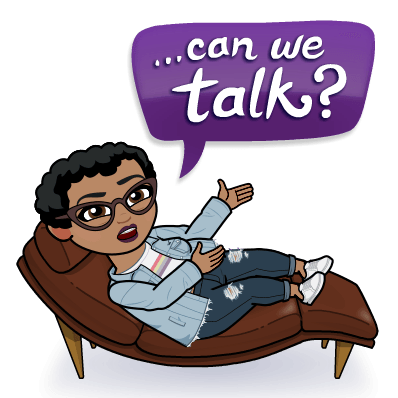
I noticed it more closely when I was scrolling through the Snap Map during my first year of college. My Snapchat contact list grew exponentially after the first week of school as I was eager to make friends. As I was snooping, there was a Bitmoji that I did not recognize— so naturally I tapped on the small human and revealed the name of a girl who I had met during orientation. While I did not know her well, I knew for certain that she was white. And her Bitmoji was a dark tan.
This just didn’t sit well with me. I didn’t know why at the time, but I know now. Let’s break this down.
Our online identities are simply performance
Very few people are ever truly themselves online, and part of that is simply because we cannot drop our physical bodies into a digital space. Because of this, we naturally create online personas that are versions of ourselves that we inherently wish to portray. Sometimes this means leaning into, or sometimes away from, certain stereotypes and characteristics of an identity.
Chapter eight of Humphreys’ Enduring Principles explains that the way we perceive ourselves and how others see us form what we call a social identity, and one of the most prominent aspects of our identity is how we racially and ethnically identify. People have certain understandings of how people of different races behave, and we usually lean to the extremes and stereotypes as the Internet can exaggerate certain qualities.

When the world wide web was first created, people of color (POC) weren’t involved in the conversation of access. The internet was and still is an inherently white frontier as the creators were predominantly white. So how do you make room for diversity in such a white space?
You create it.
Humphreys references #blacktwitter as a popular example of POC gathering to create a more inclusive environment online. It isn’t a separate app— it is simply just a subcommunity of Twitter users who identify as black and contribute to that online culture. Here, black people gather to discuss certain issues with other folk who experience similar things.
I am a big fan of #blacktwitter, and as I mentioned in my previous blog post, the platform bridges these connections between POC all over. I constantly see the use of dark-skinned emojis and relatable gifs of black people to convey a message or emotion. It’s awesome in this context because it is black people using digital media with black people, thus aligning their identity and online performance.
mainstream, well, white usage of black digital media
Anyone with a smartphone has access to diverse emojis that were implemented in 2015, and with the iOS 10 update, over 100 million iPhone users in the United States alone gained access to the gif keyboard.
Most of my favorite emojis, gifs, and reaction images include POC. Millions of individuals can now express what they wish to say online with a visual that is not truly representative of who they are.
I am a believer of constructively challenging those in the majority when I see them behave in a manner that I believe is controversial. Many, including myself, have asked white individuals why they use a certain shade of an emoji or a specific gif when sending a text or posting an update on Facebook.
Some of the reasons that I’ve heard are as follows:
“It’s actually a better fit for me. I’m not that white.”
This is the most common reason I have heard, and is likely the mindset that the girl I met at orientation had when creating her Bitmoji. I’ll admit— we have to be real here. The shade range of the Apple emojis are not as poppin’ as Rihanna’s Fenty Foundation line.
You may not be pale as snow, but the amount of tan that you do have does not constitute enough of a shade difference to choose a brown emoji. Hell, I’m somewhere in between the third and fourth emoji, but I would not pick the darkest emoji just because I thought it suited me better.
Embrace your whiteness. It comes fortified with privilege that many of us do not have.
“This gif is just so funny/relatable/says what I wanted to say.”
Maybe the gif of Sam Jackson saying “Tick Tock, Muthaf*cka!” isn’t the best reaction for you to use. I’m sure there’s a just as impactful gif from anyone from the Office. Try that one of Judge Judy tapping her watch instead. I’d laugh just as hard, if not harder!
“I meant it in solidarity…”
And we appreciate that.
With the current racial climate, we need as many white allies to speak up about racial injustice so that those who aren’t as receptive can get a clearer understanding of what POC face. I would say, however, that not every online conversation requires 1. Your input and 2. Imagery that represents your point. Just be wary – you do not want your allyship to suffocate and quiet the voices of the oppressed.
“It isn’t something i think about.”
Well, it’s time to start thinking about it.
Changing your digital language
So why does it matter if white people use digital imagery that includes black people? I’ll tell you why.
Every day I wake up, and I am prone to more racial bias because I am a person of color. It’s not possible for me to go outside and change the color of my skin on a whim just because I think it suits me better.
We can’t change the color of our skin to get our points across. I can’t change my blackness for some running online joke. I cannot alter the implications that come with being a black person in America with the tap of my fingers.
So, with that in mind, I urge you to think twice about the imagery you use online. I can guarantee you that you can find a gif that is equally hilarious that does not rely on the stereotyping of POC for a reaction. You can survive using a white emoji because your whiteness does not suffer from systemic racism. Unless, of course, you want the racial injustice that comes along with the color of that emoji.
If that’s the case? Word.
P.S. I welcome and consider other opinions with an open mind. If you disagree, please share below! I just ask that you back up your argument for a healthy discussion 🙂



Leave a Reply