A few blog posts ago, I discussed the topic of parasocial relationships and how I like to stay up to date with Anthony Mackie’s upcoming projects. When I heard he was going to star in an episode of Black Mirror… you can only imagine how pumped I was. I’ve also been waiting for my chance to blog about this episode for like, forever, so let’s dive right in.
Mackie stars alongside Yahya Abdul-Mateen II and Nikki Beharie in episode one of the fifth season of the sci-fi anthology series, titled “Striking Vipers.” To put it simply, the episode is about two long-time friends who share a love for the video game, Striking Vipers. When submerged in the new virtual reality version, they discover that they can have sex in the game, complicating their friendship and hurting their outside romantic relationships.
Clocking in at a mere sixty-one minutes, the episode tackles a plethora of themes surrounding sexuality, relationships, and black masculinity. At its core (and what certainly makes it an episode of Black Mirror) it challenges the boundaries put in place with virtual reality. I wanted to pose the question(s) – does the seemingly harmless use of VR in “Striking Vipers” negate the emotional damage it brings to the main characters? Is it really cheating if the affair happens in cyberspace? Let’s discuss.
vr in striking vipers x
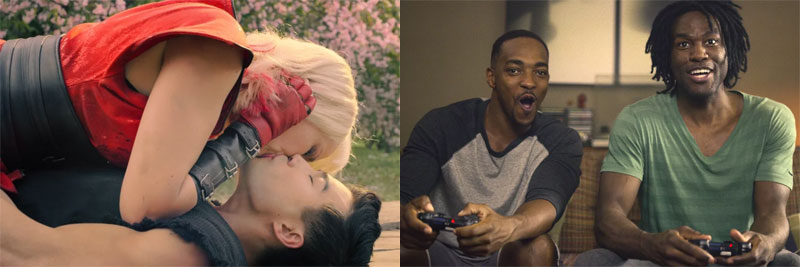
As I mentioned earlier, Danny (Mackie) and Karl (Abdul-Mateen) have a not-so-platonic friendship revolving around this video game that they had been playing since their college days. It is similar to Mortal Kombat as it allows 1-v-1 gameplay where the players fight one another to the death, and when we flash-forward eleven years, Striking Vipers X comes out, equipped with VR technology that “emulates all physical sensations.” Karl gets Danny the game for his birthday, and by the end of the day, the two are back in their secret temple, playing as their favorite characters— Lance (Ludi Lin) and Roxette (Pom Klementieff, another MCU star) respectively.
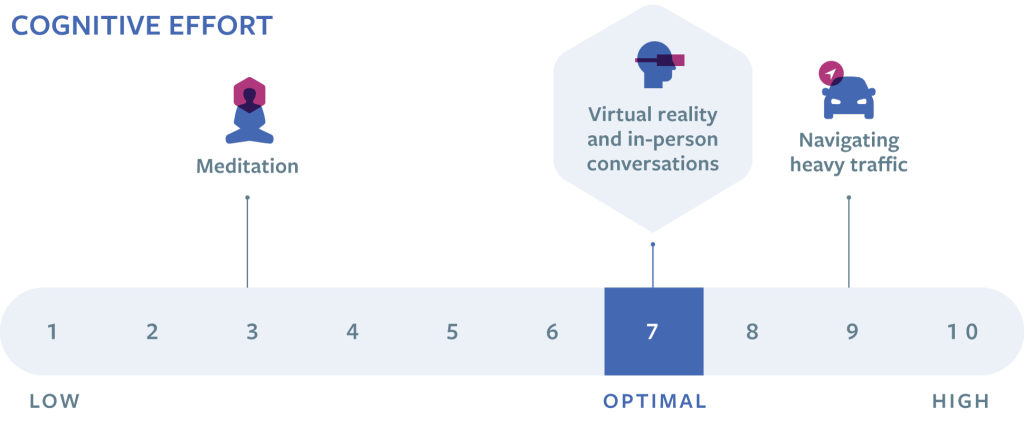
The concept of VR is not foreign to us. Many companies are studying its benefits in order to incorporate the technology into their everyday strategies. Facebook, for example, did a study on the way VR fosters social connection between individuals that have never met before. They hired a VR company to measure the emotional and cognitive responses of the participants with the VR sets.
It was found that the participants— especially introverts— were able to establish real relationships in the virtual environment. In fact, the virtual setting left the participants feeling comfortable and hit what was called a cognitive sweet spot— they exerted an optimal amount of cognitive effort that did not leave them feeling exhausted after the conversation. Because of this, the virtual environment unlocked this true authenticity and allowed for deep connections to be made.
This idea of VR encouraging its users to engage in building authentic connections can be applied to Danny and Karl in their beloved game. In real life, they act like typical men— hesitant to show emotions with one another with a strained version of what their friendship used to be. In the game, they rekindle their friendship and are able to show their feelings without the inhibitions influenced by societal norms.
transporting into the game
Both Danny and Karl are amazed at just how real the game feels. Obviously, they are not physically together. Through telepresence, the two friends explore their relationship further despite not meeting in the real.
Telepresence, often just shortened to presence, is a psychological state in which one’s experience is facilitated through technology— the technology in question, however, is not fully perceived or acknowledged by the user. That perception could range being somewhat unaware to being fully immersed to the point where the user forgets there is any technology involved.
Examples of presence include IMAX movie theatres, a really well-done film, or variations of VR. In extreme cases, a user can fall into the transported state. Throwing it back to my Intro to Communications class, the transported state is a “deeply engaged experience with the message” (the technology) “where the user is now emotionally and cognitively involved.” This can definitely happen when the user completely fails to acknowledge the role of technology in their experience.
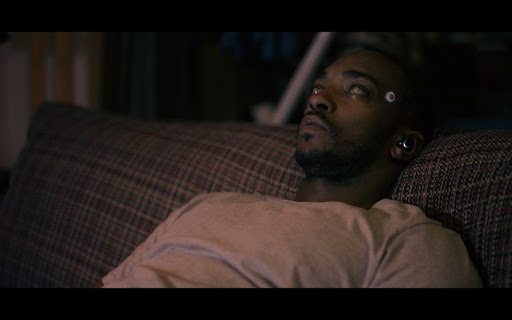
In Danny and Karl’s case, they are most definitely in a transported state, so much so that while they play the game, their bodies in the real are in this VR-induced coma.
It’s important to mention that presence is the property of the individual, not a byproduct of a technological experience; but even though it belongs to the user, the tech can alter or even enhance it. It’s for these reasons that the emotional and physical connections in the game feel so real to the male protagonists, and are just as authentic in the real.
so… what’d y’all think?
There are quite a few popular reviews of this episode, each nodding to different prevalent themes. I happened to find a critical review from The Wrap that focused on the logistics of releasing a game like Striking Vipers X in our universe.
Phil Owen makes several points about why this game simply could not exist with our technology and policies that we have in place. Most of them were pointed at the VR technology itself. Besides engaging in sex needing to be an intentional feature in the video game, the VR would need to implement “sensitive genitals” so that users can actually feel the stimulation. Also, in case we did not realize, the sexual feature would have to be, um, allowed for distribution. It would need to be sold as an adult only game and so many laws would have to be put in place so that minors don’t get a hold of the game. And, to be honest, if you could have sex in the game, why would you play the game for its original purpose?

These are all very valid observations, and I agree with basically all of them. Every piece of popular media needs criticism, but those in the majority would suspend their disbelief of the technological logistics to focus on the heart of the episode: is it still cheating?
fake actions, real impact
While Danny and Karl explore their sexual desire in virtual, Danny’s marriage with his wife, Theo (Beharie), is strained in real life. The viewers can sense this at the start of the episode.

We open with Danny and Theo roleplaying as strangers at a bar eleven years prior to the release of Striking Vipers X. Soon enough, we find out that they’re actually together and were looking for ways to spice up their relationship. Danny isn’t confident in being himself and it affects his relationship, but when he isn’t being “Danny,” he’s a lot more comfortable.
Being in the game with Karl is beneficial to his identity insecurity. He always plays as his favorite character, Lance— this extremely chiseled and dominant Asian male character— and someone he’s certainly not in real life.

He isn’t the only one playing as someone he’s not. Not only does Karl play as a someone who is a different race, but also a different gender. Karl’s video game character, Roxette, is an Asian woman of the Street Fighter Chun-Li variety. He gets to play as her and assumes the stereotypical characteristics that society places upon women. He ultimately becomes addicted to the sensation of the female orgasm, a rush for which he is never able to find a substitute in the real.
This multi-layered identity-swap is another blog post topic in itself, but the characters act as another wall in which Danny and Karl hide behind so as to mask their cyber-sexual relationship. It isn’t until Danny and Theo’s wedding anniversary that the boys realize they’re addicted to the game and begin to consider the impact of their relationship.
Despite their affair only happening through the conduit of VR, there are real life implications that affect other parties. Danny and Theo are having serious marital issues, and Karl learns that he can’t have sex in real life— only in virtual and with Danny. Because they had an emotional connection that impacted their outside relationships, it’s safe to say that Danny was cheating on Theo with Karl.
the verdict
I watched this episode with a few of my friends last June and we had a long discussion about the ending. Spoilers!
The episode was neatly wrapped up with a big red bow thanks to the compromise that the three main characters came up with. Once a year on Danny’s birthday, the boys are allowed to “play” all night, while Theo gets to fulfill her need of the thrill of sex with strangers for one night only.
My friends decided that it was cheating since they have genuine feelings for one another that caused Danny to stray away from his marriage. It just goes to show how VR is capable of forging deep connections and fostering authentic relationships without having to physically be with one another.
what did i think of the ending?
I sifted through some of the commentary (and a ton of memes) about the ending of the episode, and lots of viewers tend to harbor in on the fact that it was a pretty pragmatic ending— it didn’t have that typical Black Mirror shock ending that a lot of viewers crave. Another twist was the fact that after attempting to uncover feelings in the real, Danny and Karl kissed only to find that there just wasn’t that spark – it was only in the game and as their favorite characters.
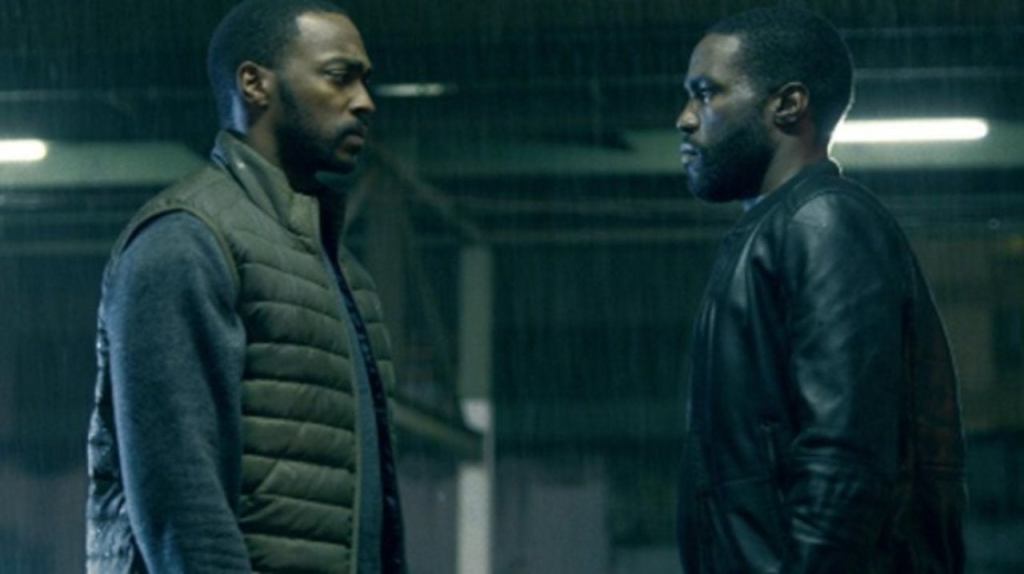
I, however, think the ending was shocking because it was pragmatic. Who expected everyone to get what they wanted in the end?
Karl didn’t continue his streak of risk behavior because he was able to get his SVX fix. Danny and Theo have a temporary Band-Aid for their marriage (as well as a second baby, something Theo strived for the whole episode) to keep them at bay until they decide whether they can stay together, or if divorce is the optimal option.
There were so many alternate ending possibilities in the works as well, but someone would always end up with the short end of the stick. What if Danny and Karl had a life together, playing Striking Vipers X for the rest of their days? Theo would end up a depressed single mother. What if Danny and Theo played the game? Karl would be a depressed addict. What if Theo left Danny? I don’t think anyone could picture where Danny would end up— that’s how much he needs her.
Call me an optimist, but I love this ending because everyone—at least for now— is equally content. How’s that for a Black Mirror episode?


Leave a Reply