Start thinking about what you can do for black women, not just about what they do for you.
As we begin to wrap up a most unforgettable year, it is important to reflect on the barrage of historic moments through which we lived. Being in a global pandemic helped bring to light other plagues within our society— white supremacy.
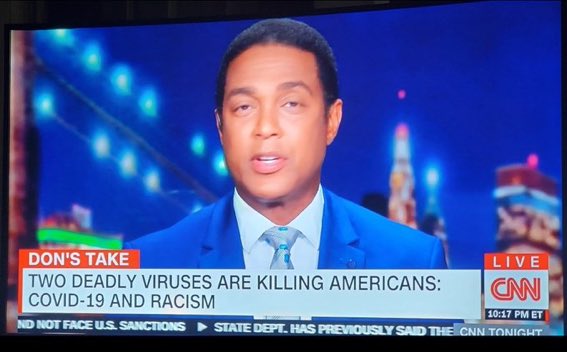
In May (which literally feels like a year ago), the death of George Floyd flooded the media, sparking a new flame in the Black Lives Matter (BLM) movement. Videos of his death made it clear to those who were previously unaware that there is a significant race issue in the United States. For a lot of Americans, violence against Black people is not new to them, but the topic was heightened as folks were forced to stay home and see what was happening online. All over social media were hashtags like #BlackLivesMatter and #JusticeforGeorgeFloyd— and rightfully so. The attention to this event aided in the arrest of Derek Chauvin, the officer who choked Floyd to death with his knee, as well as the three other cops also at the scene.
Countless of Black people killed by the police, unfortunately, do not get the same level of awareness as the more infamous cases, like George Floyd, Trayvon Martin, Philando Castile, Eric Garner, and Tamir Rice. In 2020 alone, 192 Black people have been shot to death by police officers in the United States. One of those cases being that of Breonna Taylor, a 26-year-old Black woman who was killed in her own home back in March of 2020. Many Americans, like myself, did not hear about her death until after George Floyd’s in May of 2020. On Twitter, BLM activists demanded justice for Breonna Taylor and succeeded in getting her case trending. On top of that, Taylor simply did not get the same amount of energy as George Floyd, despite being killed over two months prior and while she was asleep. The misogynoir is evident and extremely prevalent in our society, and we need to reevaluate the treatment of Black women.
misogynoir and considering your standpoint
Misogynoir was coined by Moya Bailey, a queer Black feminist who wanted to describe the intersectional struggle of race and gender that Black women inherently face. She defines it as the “co-constitutive, anti-Black and misogynistic racism directed at Black women, particularly in visual and digital culture.” While this definition references the anti-Black and misogynist nature of arts and visual culture, misogynoir shows up in nearly every crevice of the Black female experience. For example, misogynoir in healthcare is incredibly prevalent. In the United States, Black mothers are three times more likely to die during childbirth than white women. Somehow this idea that Black women have a stronger pain tolerance than white women has become indoctrinated, or that they are lying about their pain in order to get more drugs. This has literally caused doctors to ignore symptoms and ultimately result in more Black deaths.
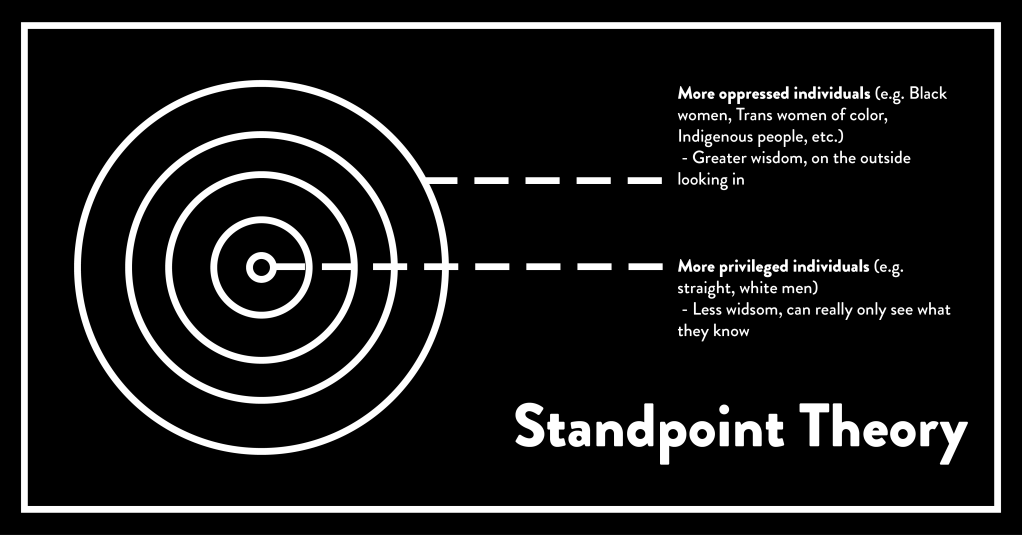
It can be difficult to understand something that one has not personally gone through, as their personal experiences distance them from the situation at hand. Those who struggle to believe these statistics related to misogynoir often are viewing the situation from a place of privilege. Patricia Hill Collins’ expansion of epistemologist Nancy Hartsock’s standpoint theory explains that a standpoint is formed through the “experience of collective political struggle” based on a personal identifier (e.g. race, gender, sexual orientation, class, etc.).
If privilege is set up like a set of concentric circles, those who are more privileged stand at the center, whereas those who are more oppressed stand further away— but those on the outskirts have more wisdom because they can observe those that are more privileged than them. Because Black women face an intersectional struggle, they are much more knowledgeable about systems of oppression, like white supremacy and the patriarchy. It’s all about point of views— Black women are constantly being told how to feel and that their struggles aren’t legitimate.
we are the only ones who care
From my own observations, it is clear that the only people who care about the overall well-being of Black women are Black women themselves. If there is an instance of injustice (e.g. mistreatment in the workplace, discrimination towards Black women’s hair, sexual assault and violence) I typically find out about it on Twitter from other Black women. A company or celebrity can quickly go under water if they are exposed for misogynoir via social media. It is this exact labor that starts movements and brings issues to the surface.
In a study done by Lisa Nakamura, she explains that digital labor is a task often performed by marginalized women— they do it because they care, or it is just something they do every day on social media. Black women will spend countless hours calling out sexism and racism online and not even consider it work. Although it can be quite exhausting to spend copious amounts of time engaging with misogynist trolls online, they do it willingly and despite the risk. Over time, it has basically become an expectation that women of color are the ones who are supposed to do this labor— but, hello? It’s not like they created the problem. Why should oppressed people be responsible to clean up a mess they didn’t make?
In the case of 19-year-old Oluwatoyin “Toyin” Salau, she was killed by her sexual abuser after going missing for a week. Salau was an avid BLM activist, but being a dark-skinned Black woman who was vocal about systemic racism and misogyny put her more at risk for being attacked. This was the literal silencing of a Black woman who only wished to advocate for BLM and fight systemic issues. What is even more disappointing is that Aaron Glee, her abuser and killer, was a Black man. Even though they share the same struggle of racism, Glee perpetuated the patriarchy when taking her life. Marginalized groups can still oppress other minority groups, and this power imbalance exists everywhere.
It was honestly so depressing to hear about Toyin’s passing on Twitter. To see a Black girl— who was younger than me— that just wanted to expose the man that sexually assaulted her get killed brought me to tears. That could have been me, or my sisters, or my aunts, or my mother. When one Black woman is in pain, every Black woman feels it. I think that is why we fight so hard to make these acts of hate known, because it could have been any of us.
misogynoir doesn’t care if you’re famous
Misogynoir is woven into the lives of every Black woman because we live in a world where they are not valued. Even celebrities, some of the most beloved people on the planet, are not immune to systemic oppression. The fact that #ProtectBlackWomen is a controversial concept proves that. Back in October, Megan Thee Stallion was the musical guest on Saturday Night Live. She performed her hit track Savage (feat. Beyoncé), twerking and rapping like her usual, unapologetic self. Towards the end of the song, she began to speak against misogynoir and urged viewers to “protect our Black women, because at the end of the day we need our Black women.”
This performance was one that Megan Thee Stallion made incredibly personal, and she was both praised and criticized for it. Earlier in the summer, she was shot by rapper Tory Lanez as they were leaving an event and they noticed the police arriving. Megan’s initial thought when hearing the sirens was to protect him, as she was very familiar with the poor relationship between cops and Black men. Instead, she was shot in the foot, and when the fiasco was reported, there were skeptics online that did not believe Lanez had shot her. Megan had to go as far as to share photos of her post-surgery, responding to critics on Twitter, and writing an article in the New York Times in order to make her story heard.
The rapper’s goal with this performance was to get people to pay attention to the blatant hate and violence towards Black women that happen every day. While plenty of Black women do this frequently (on social media and in real life), celebrities have much greater influence and reach. In Spring-Serenity Duvall and Nicole Heckemeyer’s analysis of Black celebrity activism, they researched the involvement of 10 Black celebrities in the #BlackLivesMatter movement. They gathered that these Black celebrities formed a parasocial relationship with their fanbase while also helping to define a huge social movement.
Black, female musicians like Megan Thee Stallion are turning to social media and their own craft to amplify and uplift other Black women, as well as urge their non-Black fans to open their eyes to injustice. Megan Thee Stallion’s use of #ProtectBlackWomen in her performance forced avid SNL viewers to listen to her message, whether they were fans of her music or not. Now when I think of that hashtag, I will think back to her performance and sense both the pain and passion she exhibited. I thought it was a great idea to slip a crucial message into a song that empowers so many listeners.
Hashtag callout
Megan Thee Stallion’s use of #ProtectBlackWomen was a form of hashtag activism used to “call out” the mistreatment of Black women— a very specific experience that is often overlooked in society. It is both a Black issue and a feminist issue that other hashtags like #BlackLivesMatter or #WomenEmpowerment tend to drown out. In those campaigns, there are still certain folks that have more privilege over others, so having a separate space for Black women to express their anger was very much needed.
Mikki Kendall, a Black activist and writer, launched the campaign #SolidarityIsForWhiteWomen back in 2013 to “call out” the notion of solidarity and sisterhood in modern feminisms. In the first chapter of her book Hood Feminism, she explains that mainstream feminism today caters to the empowerment of middle-class, white women and ignores the laundry list of intersectional issues that impact all other women.
This online campaign made a lot of folks upset! Kendall argued that “sisterhood is a mutual relationship between equals.” To assume that all women are a part of this feminist sisterhood is to say that all women are equal, which is most certainly not the case. It’s why #ProtectBlackWomen exists and is necessary. Because white women can sleep peacefully at night and leave parties with their friends without fearing that they’re going to get shot and killed.
y’all have got to do better
Anyone can be a perpetrator of misogynoir (even other Black women, but that’s a whole other conversation). It especially hurts that white women and Black men are some of the more common offenders. Black men understand the crippling effects of racism and the plague it has on society. We cannot forget George Floyd and the other Black men that have fallen victim to police brutality. Because of this, there should be more compassion for Black women from them. But some Black men reinforce the patriarchy and use that male privilege to their advantage rather than standing up for other Black women.
White women have white privilege and that is an incredibly powerful tool that can be used for good or for evil. They can use that privilege to stand up for other women of color (while also allowing them to speak for themselves), or they can just choose violence and be racist!
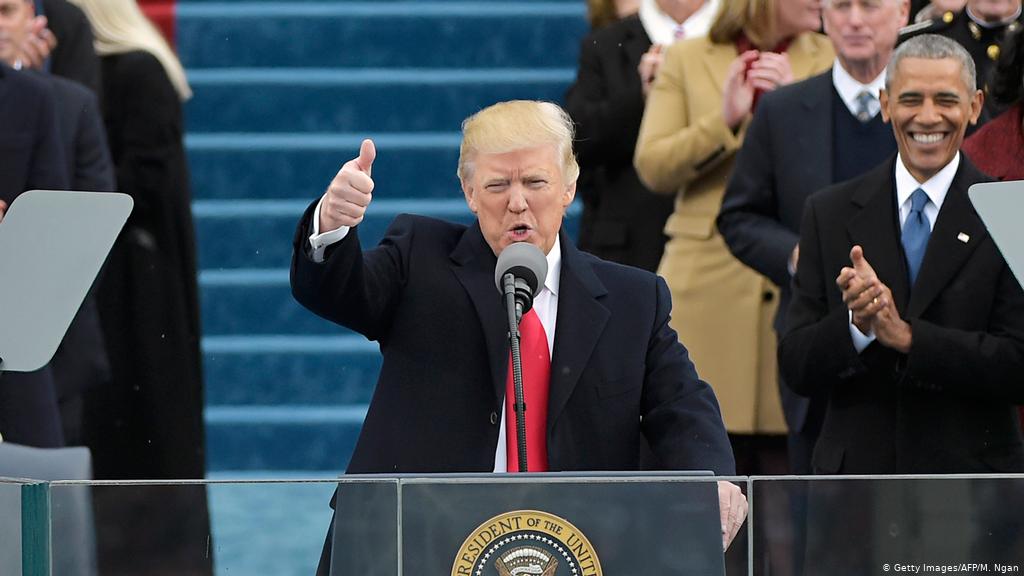
I remember when my favorite teacher in high school, a white woman, told me I shouldn’t worry too much about a Trump presidency the day after he was inaugurated— what a wonderfully terrifying thing to tell a fragile Black child.
Much like the most current wave of the BLM movement, there are things that others can do for Black women to support them and stay educated.
- Listen. This is the most important thing, and I really mean listen. Hear what Black women are saying and fully absorb it. Reflect on it. They know pain and discrimination like no other.
- Have compassion. If a Black woman is struggling with something, do not make things harder for them. If they ask for assistance, offer helpful resources.
- If they are saying that you have done something that harmed them, then apologize and learn from it. And do not expect them to educate you on what you did wrong. Google is free for that reason.
- Do not speak over Black women and do not speak for Black women.
- Give Black women opportunities and platforms. They are more than capable, they just need the chance.
- Believe Black women. They’re not making up their pain.
And i’m pissed about it
I chose to go about explaining 2020: The Year of Misogynoir in a pretty calculated way, but that does not mean my blood was not boiling the entire time. It’s what I’m used to. As a Black woman, I’ve had to fit into spaces that weren’t built for me— to tone myself down in order to make (so, so, so many) white people comfortable. It was a shield to make sure I could graduate from my predominantly-white private high school with minimal trauma (but quite frankly, there’s a lot of it that I still need to unpack). Language and writing were the most important way for me to do that. I find it empowering now that I can put my thoughts into a coherent piece so that those who aren’t familiar with my struggles first-hand can maybe understand it in writing.
Misogynoir isn’t only violence and mishandled health care. It’s about the fact that Black women have to navigate a world that is not made for them. It’s about the fact that Black women are an afterthought in every room. It’s about the fact that Black women are only valued for what they can bring to the table— like better diversity rates, beauty trends, Black culture, Black bodies, Black music, etc.— but not for who they are.
This blog post is for anyone who is not a Black woman. I wanted to give a Black woman’s perspective on the many ways in which society fails us. Unless non-Black people are actively seeking sources from Black twitter or other Black writers, to whom are they listening? From where are they getting their information about Black issues? The one thing that Black women need more of is people who care about them enough to fight for them.
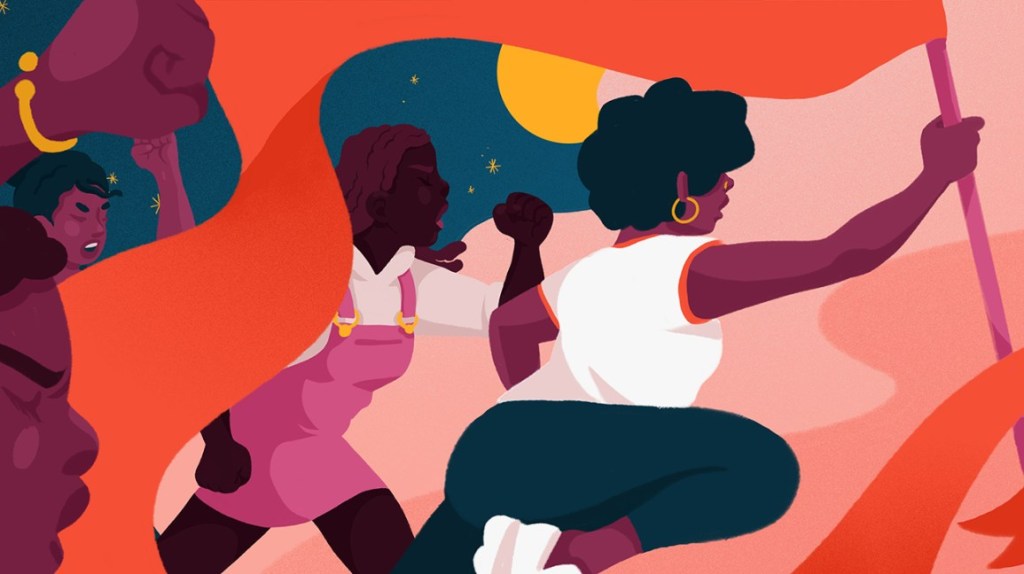
Black women contribute so much to the world. White women love Lizzo because she’s a fat Black woman that loves her body and she makes them feel better about their bodies. Makeup companies suddenly have a poppin’ shade range because Rihanna recognized the demand for darker foundation shades. And if I see another white, hippie, crystal-wearing, spiritual girl with (awful) dreadlocks, I’m going to fucking lose it.
I walk into a room and it is expected that I think about how others feel about my presence. I’m tired of having to enter a space and be much stronger or perform ten times better to even get half of the same amount of recognition. And I’m tired of my impostor syndrome! It took such a long time for me to even figure out who I really am because I’ve had to change myself to make others not feel threatened, and I’m literally the least threatening person ever.
I’m still working on harnessing my feminist rage after a lifetime of being told to suppress it, but it’s only going to get louder from here.


Leave a Reply